New release · The Hummingbird Year — $12.90 Get the book
The Hummingbird Year

Victor Carpenter · The Complete Field Edition

The Hummingbird Year

  • They were here every day. Then one week they stopped coming. and everyone tells you it’s migration, in July
  • One bird sits above the feeder and chases every other one off. a second feeder will not fix this — unless you put it somewhere specific
  • There is a praying mantis on your feeder. it is a real danger, and almost nobody warns you
  • One hovers at your face, three feet away, and just looks at you. there is an honest answer, and it is not the one you’ve been told

141 pages on every hummingbird question there is — fifteen species, the feeder, the garden, the whole year — with every claim sourced and the honest word where nobody knows.

$12.90new release

Instant PDF and EPUB. Read on any device, or print it.

Get the book →

141 pages · 40 chapters · 33 original plates · 30-day refund · Free lifetime updates

Why this book exists

Every hummingbird book is either a bird guide or a garden book. Neither answers your actual question.

Identification guides tell you which species you are looking at. Gardening books tell you what to plant. Neither one tells you why the bird hovers at your face, why one of them has claimed your feeder like a warlord, whether the thing on the pole in August can actually kill it, or what it means when they all vanish in a week.

Those are the questions people actually ask. They come up in my comment section every single season, and most of them have clean answers that simply are not well known — and a few have no answer at all yet, which this book says out loud.

“Where the honest answer is less charming than the popular one, you get the honest answer.”

What you get

Seven parts. Forty chapters. One bird, completely.

The Machine

Three grams. Fifty wingbeats a second. A tongue that pumps rather than wicks — a fact only established in 2011. And torpor, the nightly shutdown that makes a dawn hummingbird look dead.

The Fifteen

A page each for every species that occurs regularly north of Mexico, with a key that filters by region and season first — so most readers are down to one or two birds in thirty seconds.

The Feeder

Saucer or inverted, the nectar rules, a changing schedule by temperature, cleaning without soap, ants, wasps, the bully, and a ranked diagnostic for a feeder nobody is using.

The Garden

Plants by seven regions, a bloom calendar built around the two gaps every yard has, containers for balconies, water they will actually use, and the pesticide chapter that matters more than all of it.

The Year

Arrival dates by region, the walnut-sized nest, the August surge, the five-hundred-mile Gulf crossing, when to take the feeder down, and winter hummingbirds.

What They Do & Trouble

The hovering, the window tapping, the sounds, the dive. Then windows, cats, mantises, the grounded bird — and the hummingbird trapped in your garage, which no other book covers.

Why you can trust it

Every number has a source. Three widely repeated ones are corrected.

Hummingbird statistics travel badly. They get rounded up, attached to the wrong species, or quoted from a single stressed individual. Where this book gives a figure it names the species and the source — and where a famous claim did not survive checking, it says which one and why.

Commonly repeatedWhat the research saysSource
Hummingbird heart rate: 1,260 bpm That figure is a Blue-throated Mountain-gem, not a Ruby-throated Cornell Lab species accounts
The tongue wicks nectar up by capillary action It is an elastic micropump — the fork snaps shut and traps liquid Rico-Guevara & Rubega, PNAS 2011
Leaving the feeder up delays migration Departure is driven by day length and condition, not by food Cornell Lab; state wildlife agencies

Full sources at the back: Cornell Lab, the USGS Bird Banding Laboratory, Journey North, eBird, and the peer-reviewed papers behind every claim.

141Pages
40Chapters
33Original plates
15Species covered

Part Two

Fifteen species, and the mark that separates each lookalike

Rufous or Allen’s? Anna’s or Costa’s? Each page gives the numbers, the field marks that actually work, three things worth knowing, and the thing most people get wrong.

Ruby-throated Hummingbird
Ruby-throated
Anna's Hummingbird
Anna’s
Rufous Hummingbird
Rufous
Calliope Hummingbird
Calliope
Costa's Hummingbird
Costa’s
Broad-billed Hummingbird
Broad-billed

Also inside: Black-chinned, Allen’s, Broad-tailed, Rivoli’s, Blue-throated Mountain-gem, Buff-bellied, Violet-crowned, Lucifer and White-eared — plus the rare strays and winter vagrants.

Inside the book

Built to be used outdoors, not admired indoors

The nectar rules
One part sugar to four parts water — and the four things never to add.
The ant moat
The ant moat, drawn so you can see exactly why it works.
Plants by region
Plants for seven regions, and a bloom calendar with no gaps.
The nest
A nest the size of a walnut, bound with spider silk.
The dive display
The Anna’s dive — and the squeak made by the tail, not the voice.
The arrival calendar
Month by month: what should be happening in your yard now.

Full contents

Everything in the book

One · The Machine

  1. A Bird That Weighs Less Than a Nickel
  2. How It Actually Flies
  3. The Heart, the Breath, the Fuel
  4. The Tongue
  5. Torpor
  6. Why the Colour Changes

Two · The Fifteen

  1. Which One Is In My Yard?
  2. The Fifteen, One by One
  3. The Rare Ones

Three · The Feeder

  1. Choosing a Feeder
  2. The Nectar Rules
  3. How Often to Change It
  4. Cleaning It Properly
  5. Where to Hang It
  6. Ants
  7. Bees and Wasps
  8. The Bully at the Feeder
  9. When They Do Not Come At All

Four · The Garden

  1. Why Flowers Beat Feeders
  2. What to Plant, by Region
  3. The Bloom Calendar
  4. Balconies and Containers
  5. Water They Will Actually Use
  6. The Pesticide Problem

Five · The Year

  1. Spring Arrival
  2. The Nest the Size of a Walnut
  3. Summer, and the Late-Season Surge
  4. The Gulf Crossing
  5. When to Take the Feeder Down
  6. Winter Hummingbirds

Six · What They Do

  1. Why It Hovers at Your Face
  2. Why It Taps the Window
  3. Do They Know You?
  4. The Sounds They Make
  5. Why They Stopped Coming

Seven · Trouble

  1. Windows
  2. Cats, Mantises and Spiders
  3. The Grounded Bird
  4. Trapped in a Garage
  5. Getting One to Your Hand

Reference

  1. The Arrival Calendar
  2. Plants at a Glance
  3. The Sixty-Second Feeder Audit
  4. The Emergency Page
  5. Your Hummingbird Log
  6. Sources and Further Reading

Honestly

Who this is for — and who it isn’t

This is for you if

This is not for you if

You want a pocket photographic identification guide to carry in the field. The plates here are hand-drawn to show posture and field marks, not photographs. For a difficult bird use a photographic guide, eBird, or Cornell’s free Merlin app — and then come back here for what the bird is actually doing.

Victor Carpenter

The author

“I read every comment. This book came out of them.”

I did not set out to write about hummingbirds. I write about whatever is in the yard, and for most of the year that is cardinals, chickadees and doves.

Then I made one video about hummingbirds that stop coming, and the comment section filled with people asking things nobody had answered for them. What to do about the mantis on the feeder. Whether the bird tapping the window really was asking for a refill. Why one hummingbird was driving all the others off. Whether leaving the feeder up in September would stop them migrating.

Some of those questions have clean answers that are simply not well known. Some have answers that contradict the advice people are given. And a few have no answer at all yet, which is worth saying out loud rather than papering over.

— Victor Carpenter · bird observer, United States

Questions

Before you buy

What format is it?

Both PDF and EPUB, included. The PDF is 6 × 9 inches and prints cleanly at home; the EPUB reflows for a Kindle, a phone or a tablet, so you can set the type as large as you like. Both download instantly.

Does it apply where I live?

It covers the United States and southern Canada. The species section includes all fifteen hummingbirds that occur regularly north of Mexico, and the plant and arrival tables are broken out by seven regions.

I only ever see one kind of hummingbird. Is the species section wasted on me?

If you are east of the Great Plains you almost certainly have Ruby-throated and nothing else — the book says so on the first page of that part. But four fifths of this book is feeder, garden, behaviour and the year, and none of that is species-specific.

How is this different from the free hummingbird guide?

The free guide is 32 pages and answers ten common questions. This is 141 pages and adds the biology, all fifteen species, the full feeder section, the entire garden part, migration and arrival calendars, the trouble chapters and the reference section. If you liked the short one, this is the whole thing.

Is the artwork AI-generated?

The plates were produced with AI tools and then checked one by one against reference photographs for anatomical accuracy — bill shape, gorget colour, field marks. They are stylised drawings, not identification photographs, and the book says so. The research, the writing and the fact-checking are my own.

What if it isn’t what I expected?

Email me within thirty days and I will refund you, no explanation needed. I would rather have the goodwill than the money.

It weighs less than a nickel and crossed the Gulf of Mexico to get here.

This is everything that happens in the year it spends in your yard.

Get the book — $12.90

141 pages · PDF and EPUB · Instant download · 30-day refund

And the rest of the yard

There is a companion volume for every other bird out there

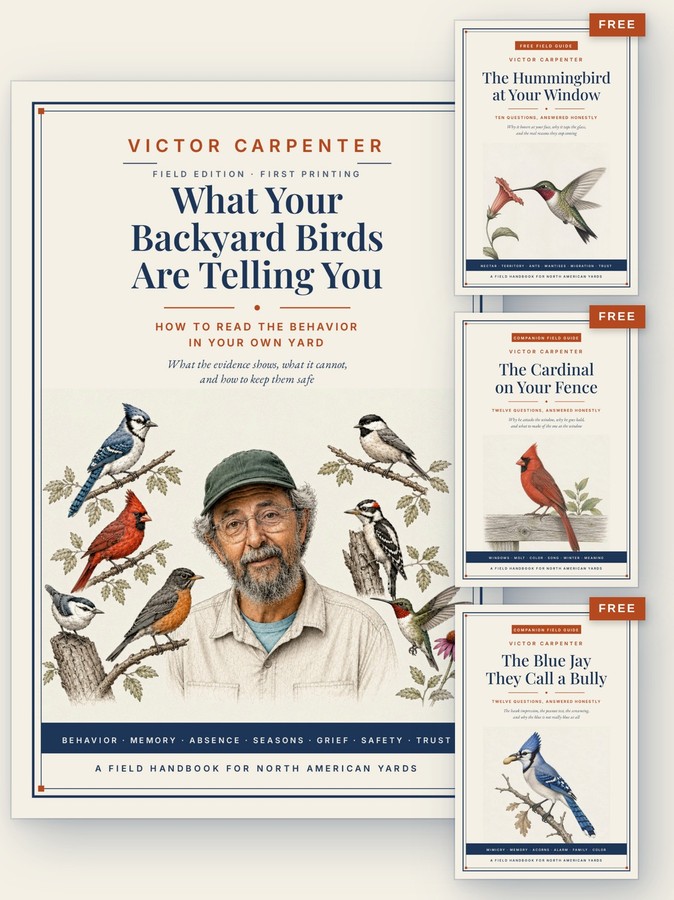
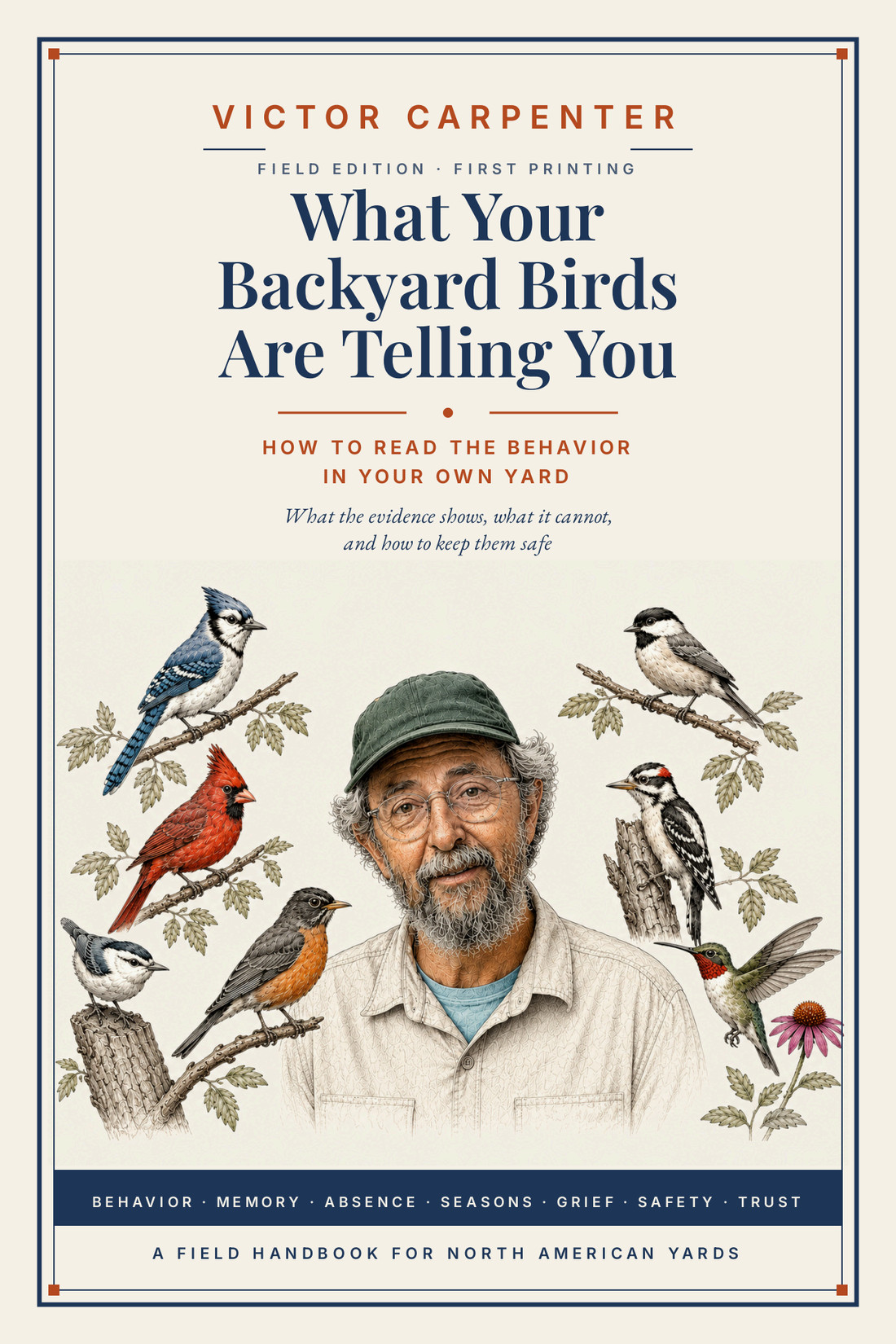
What Your Backyard Birds Are Telling You

What Your Backyard Birds Are Telling You

The main edition, 153 pages, organised by the questions people have rather than by species. Fourteen common yard behaviours decoded. What a bird can genuinely remember about you. Where they go at night, and how deep cold, storms and heat waves change what appears at the feeder.

It also contains the chapter nobody else writes — why a familiar bird stops coming, and what you could never have prevented — and a careful one on cardinals, grief and meaning.

It comes with three free species guides: the hummingbird one, plus dedicated books on the cardinal and the blue jay. Four books, 255 pages, for $12.90.

See the main edition →

Four books · PDF and EPUB